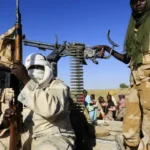

A video of Rapid Support Forces fighters holding fragments of an Iranian Mohajer-6 drone has raised alarms far beyond Sudan’s battlefields. What lies beneath is not just Iranian support for Sudan’s army, but a dangerous expansion of influence that risks transforming the conflict into part of Tehran’s wider regional strategy.
Bloomberg’s reports confirm Iranian drone and weapons transfers to the Sudanese Armed Forces. This shifts Sudan’s war from a brutal domestic tragedy into a chapter of Iran’s pursuit of dominance across the Red Sea. Instead of charting a path out of isolation, Sudan now edges toward the same failed trajectory of sanctions and international distrust that defined the Islamist regime of the past.
The 670-kilometer Sudanese coastline is no longer just a national asset—it has become an Iranian opportunity. General Abdel Fattah al-Burhan’s decision to restore ties with Tehran has brought Iranian military envoys and intelligence experts deep into Sudan, in parallel with the return of Islamist figures tied to the dissolved National Congress Party and the Muslim Brotherhood. These networks, long discredited, are once again shaping state policy under the shadow of war, embedding themselves into power while civilians are left without a voice.
The result is a dangerous mutation: the Sudanese army, once a national institution, is being re-engineered into a sectarian militia modeled after Iraq’s Popular Mobilization Forces. With Iranian drones in its arsenal and Islamists reclaiming influence, Sudan risks becoming a launchpad for regional proxy wars. Such a path will not go unanswered. Israel, the United States, and European powers will view this as a direct threat, and Sudan may face strikes, sanctions, and interventions that further devastate its people.
Sudan does not need a militia state. It needs integrity, accountability, and a national project that halts the war and dismantles the grip of extremist networks. Until that happens, the country will remain hostage to foreign agendas and old regimes—its people bearing the full cost of a war that was never theirs to begin with