The Guardline
As talks to end the U.S.–Israel war on Iran break down and President Donald Trump demands a naval blockade of the Strait of Hormuz, journalist Amy Goodman says that in times of war and conflicts, “What I care about is the answer, and I care that people in this country don’t get health care at the same time that money goes to kill others in another country.”
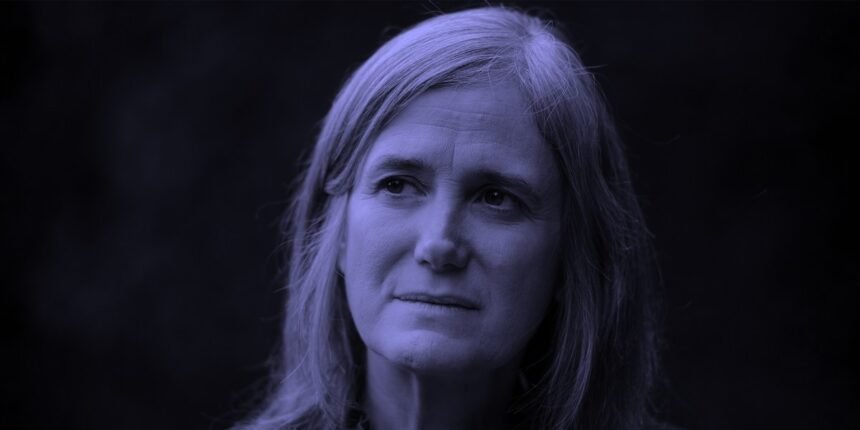
This week on The Intercept Briefing, Goodman speaks to host Akela Lacy about a new documentary called “Steal This Story, Please!” The documentary follows Goodman’s life, journalism career, and the building of the independent news program “Democracy Now!” which just celebrated its 30th year. Recalling times when networks used their video footage, says Goodman, “I encourage that. Steal this story, please. It’s a failure if it’s an exclusive. We are covering these critical issues of the day, and we want to ensure that these stories get out because independent media is essential to the functioning of a democratic society.”
Many journalists and news outlets don’t ask tough questions to maintain what she calls the “access of evil — trading truth for access,” and to that, Goodman says, “Then it’s not worth being there at all. It’s our job to hold those in power to account.”
Listen to the full conversation of The Intercept Briefing on Apple Podcasts, Spotify, YouTube, or wherever you listen.
Transcript
Akela Lacy: Welcome to The Intercept Briefing. I’m Akela Lacy, your host, and a senior politics reporter at The Intercept. We’re bringing you a very special episode today. If you know anything about independent media, you’ve likely heard of the famous show “Democracy Now!” and its intrepid and fearless host Amy Goodman
[Clip from “Steal This Story, Please!”]
Rush Limbaugh: Radical leftist TV program called “Democracy Now!” …
Unknown speaker: I’m not asking again. That way, or you get arrested.
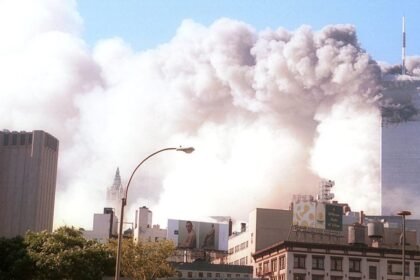
Amy Goodman [montage]: From ground zero … From East Timor … As we deplane in Haiti … From Georgia’s death row prison… We’re in occupied Western Sahara … We’ve walked across the border … We’re in the middle of Trump Tower … This is “Democracy Now!,” the war and peace report. I’m Amy Goodman.
AL: “Democracy Now!” has opened the door for so many independent media outlets doing investigative reporting and asking tough questions, including The Intercept and many other outlets that we admire. Amy Goodman is a journalist who I have incredible respect and admiration for. And today, I had the distinct pleasure of interviewing her about a documentary on her life’s work.
We’re also joined by one of the filmmakers of the documentary, which is out now — “Steal This Story, Please!” — which follows Amy’s life and career in journalism and the building of the independent journalism Goliath that is “Democracy Now!”
Amy Goodman, welcome to The Intercept Briefing.
Amy Goodman: Akela, it’s an honor to be here.
AL: Tia Lessin, welcome to the show.
Tia Lessin: Thanks so much for having us.
AL: Amy, as someone who has long covered U.S. wars and global conflicts, what do you make of how mainstream media is covering the U.S.–Israel war on Iran? Is it any different from how the media covered the 2003 Iraq War, which is something that comes up a lot in the documentary?
AG: Akela, our motto is “Go to where the silence is.” And that’s what the rest of the media, I think, too often misses. When it came to 20 years ago, the U.S. invasion of Iraq, hearing the voices of everyday Iraqis — almost absent from the mainstream media. And today, as Israel and the United States attack Iran, hearing the voices of people in Iran and the Iranian diaspora.
I am particularly moved by those who stood up against the regime, those who were imprisoned against the regime, those thousands of people. Of course, there are thousands who’ve lost their lives, but those who survived their fierce criticism of what the U.S. and Israel has been doing. It’s really important that we understand history, how the rest of the world sees us.
In the case of Iran, 1953 would mean nothing to most people in the United States. But for the people of Iran, the seminal moment when their leader — their democratically elected leader, Mohammad Mossadegh — was overthrown by the U.S. and Britain really ultimately for BP at the time, for British Petroleum. That led to this series of events that led to the shah and his secret police known as the SAVAK, which then led to the overthrow and the Iranian revolution in 1979. Many of those who fought the shah would then be imprisoned under the ayatollah.
It’s people who’ve been fighting for democracy who say bombing their country — let me quote President Trump — “to the Stone Ages,” will not further democracy in Iran. That’s what we so often don’t hear is the Iranian people.
AG: Let me say something Akela.
AL: Go ahead, please.
AG: When you talk about the airmen, the lives of these service members matter — of every one of them — as do the lives of civilians here in this country in Israel and Iran. It is critical that we understand what’s happened to hundreds and hundreds and hundreds of U.S. soldiers, once President Trump announced — along with Prime Minister Benjamin Netanyahu — this unprovoked war on Iran. It’s critical to understand that a number of U.S. service members have died.
You know how reporters were castigated when they raised the service members. It is really important to question, because we’re talking about lives — life and death — whether we go to war, which is why it’s critical for Congress to debate this issue and determine whether the U.S. should go to war. We have to be able to discuss these issues, and the media is the place to do it. I see the media as a huge kitchen table that stretches across the globe that we all sit around and debate and discuss the most important issues of the day: war and peace, life and death. Anything less than that is a disservice to the service men and women of this country. Anything less than that is a disservice to a democratic society.
“I see the media as a huge kitchen table that stretches across the globe that we all sit around and debate and discuss the most important issues of the day.”
So I just wonder if you could speak to how it’s beneficial for all of us when the media does pay attention to these issues. But what difference does it make if they’re not connecting it to these broader questions of accountability and power?
AG: Tia Lessin and Carl Deal, the filmmakers who made “Steal This Story, Please!” chose that. It’s our motto at “Democracy Now!” We have a few mottos. To be the exception to the rulers. That’s our job in the press. The other is to go to where the silence is. Because the fact of the matter is, it’s not really silent there. People are organizing, they’re raucous, they’re rowdy, but it doesn’t hit the corporate media radar screen.
When it comes to stealing this story, please — because we are forever polite — covering these stories like as they covered in the film, the standoff at Standing Rock. We should not have been the only journalist there covering when hundreds of Indigenous people, Native Americans, First Nations people from Canada, Indigenous people from Latin America, and their non-native allies started taking on the Dakota Access Pipeline.
We were there at one moment when they saw bulldozers excavating their burial grounds. And they were concerned about the pipeline going under the Missouri River, the longest river in North America, endangering the lives of millions of people. That’s what they were concerned about.
They saw these bulldozers. They went on the property, and the DAPL — Dakota Access Pipeline — guards unleashed dogs on the protesters. They were biting them. They called themselves water protectors, not protesters. We captured that dog with its mouth and nose covered in Native blood, and we posted online what was taking place. Within 24 hours, 14 million views.
Any corporate executive, so many. When I go into the network studios, — not only Fox; but MSNBC at the time, now MSNow; CNN — saying, why don’t you cover climate change more for these decades? The executives say it doesn’t capture enough eyeballs. Well, I think any of these executives would drool for that kind of response. Fourteen million views.
“It’s a failure if it’s an exclusive. … We want to ensure that these stories get out.”
People really do care. But because we’re the only ones there, all the networks took our video, and I encourage that. Steal this story, please. It’s a failure if it’s an exclusive. We are covering these critical issues of the day, and we want to ensure that these stories get out because independent media is essential to the functioning of a democratic society.
AL: Tia, I want to bring you in here, too. You opened the film with Amy holding a microphone, following a Trump official, persistently asking him questions about why he’s at a climate conference when Trump has called climate change a hoax, among other environmental policy questions.
[Clip of film]
AG [in film]: Hi, I’m Amy Goodman from “Democracy Now!” Can you tell —
P. Wells Griffith III, then-Trump climate adviser: I’ve gotta go to another meeting.
AG [in film]: Can you tell us what you think about President Trump saying climate change is a hoax? You could answer the question, are you not speaking to the press here?
PWG: Excuse — I’m sorry, I’m running late for a meeting. Thanks.
AG [in film]: Right, but you weren’t running late when you were just standing there.
[Clip end]
AL: Tell us about that scene, and why you chose to open with it.
TL: It was quintessential Amy Goodman there. She was going up and down the stairs, in and out of corridors, following, chasing after the Trump administration’s representative to the conference who would not stop to answer her questions. And she was just doing what a good reporter does, and she was unstoppable.
“She’s doing this for us. She is working in the public interest to get these answers from elected officials, from corporate CEOs.”
She understood that her listeners wanted to know these answers, and she was going after them. To me, it just showed everything you need to know about Amy Goodman. And it really, I think, makes the audience root for her because she’s doing this for us. She is working in the public interest to get these answers from elected officials, from corporate CEOs.
We see that throughout the film: She’s often chasing after billionaires and politicians, and oftentimes getting answers that no one else is, to questions that no one else is asking. I will say, we were going to call the film “Chasing Amy,” or “Amy Chasing” or “Chasing Amy Chasing,”
AL: I love that. “Amy Chasing –––.” Fill in the blank. [laughs]
Twenty years later, lots of mea culpas on the part of the press, “we were wrong.” Even people like David Remnick, we’re sorry we were wrong. Juan González put it perfectly when he said, to paraphrase him, it’s not enough to say 20 years later we were wrong. You need to stop the injustice when it’s happening, or at least report on it.
That is something Amy does and Juan does and her team does every single day.
[Break]
AL: There was a ton of discussion in Trump’s first term about how the media should cover someone like him. And we didn’t see many journalists doing what we saw you doing, which is, and we don’t see that today really, running people down and asking them hard questions. Often I feel like nowadays that’s associated with — I have images in my head of viral videos of reporters trying to do gotcha questions, and that’s not the kind of journalism that we’re talking about.
We’re talking about finding people in power and asking them hard questions. So I’m wondering if you could talk a little bit about what mistakes you think journalists made in covering Trump in his first term, and whether you think that we’ve learned anything from that in this second term?
AG: I think that journalists engage in the what I call “access of evil” — trading truth for access — playing on the old “axis of evil” term. This goes way back, and it’s not just with Republican presidents, it’s with Democratic presidents as well. You don’t ask a tough question because you’re afraid you then won’t be called on again. But I say, then, it’s not worth being there at all. It’s our job to hold those in power to account.
Trump is “doing that to intimidate because there’s a bigger question he doesn’t want asked.”
Right now, the stakes are so high. When President Trump tries to censure AP for not going along with Trump and calling the Gulf of Mexico “the Gulf of America.” Or his particular attack on women journalists, and particularly women of color, is grotesque. Every single time, the entire press corps should walk out, or object when he calls on the next person, when he says “Quiet, piggy” or talking about the “ugly” reporter. It’s critical reporters stand together. He’s doing that to intimidate because there’s a bigger question he doesn’t want asked, whether it’s about the Epstein files or grifting.
The amount of money his family is making, especially now during the second term, we’re talking conservatively about billions of dollars. The Wall Street Journal has done great reporting on this; the New York Times has done great reporting on this. “Democracy Now!,” I always say we prevent stories from being “priv-ished.” The word is published and maybe a story is published, but often it’s behind the refrigerator ads or it just doesn’t get a lot of attention in print, and to broadcast it is really important. Raising these issues continually.
Trump is a master of media manipulation. He sues the media. He sued “60 Minutes” for editing a Kamala Harris interview. We all do interviews for an hour, then cut it down to 10 minutes. It’s our job. Unfortunately, we don’t have limitless time.
So of course in that lawsuit, I think “60 Minutes” and CBS would’ve won, but their owners were engaged in trying to merge two corporations, Paramount and Skydance, and it wasn’t worth it to them to go through this exercise that would antagonize President Trump. So they essentially paid him off. They say the money goes to the Trump library. What was it? $15, $16 million. But what they get in return is something like a $6 billion, $7 billion merger approval.
ABC’s George Stephanopoulos saying that President Trump was found civilly liable for rape. This was in the case of E. Jean Carroll, who President Trump had a trial and was found guilty of sexual assault. The judge in the case said in common parlance, that would be rape. I think George Stephanopoulos and ABC would’ve won. But again, their corporate owners wanted a larger corporate merger — I think it was between Nexstar and Tegna — and it was worth billions of dollars.
So paying $15, $16 million to the so-called Trump library was pennies for them.
Now, this is extremely serious, especially for less financially well-off networks; you can’t afford these kinds of lawsuits. So it was a real lesson to everyone, and it’s absolutely critical that they be fought.
AL: Talking about this solidarity, or lack thereof rather, in the White House press corps around setting norms around how to handle an official like Trump. There’s a scene from the documentary I have in mind where you’re in the White House briefing room, and you’re asking tough questions about the U.S. arming and training the Indonesian military that carried out the massacre in East Timor that you were present for.
[Clip from film]
AG [in film]: Will President Clinton push for the sale of F-16s to Indonesia when Congress returns in January? José Ramos-Horta says it’s like selling weapons to Saddam Hussein.
Mike McCurry, White House Press Secretary: That’s not the view of the United States government. We make arms transfers of that nature when they’re in the interest of the United States.
AG: You’re supporting the military dictatorship by doing it.
MM: Well, you’re also advancing U.S. strategic interests in the region.
[Clip ends]
AL: The press secretary sort of makes a joke at your expense, and you see the rest of the reporters start laughing with him. What was that experience like being surrounded by that press corps? Did you ever question your approach? How was that for you?
AG: This was about the 1991 massacre, which Indonesian soldiers armed by the United States with M-16s. Indonesia invaded East Timor December of 1975, and they would go on to occupy East Timor for two decades. They killed off a third of the population.
My colleague, journalist Allan Nairn, and I survived a massacre on November 12, 1991, which the Indonesian soldiers opened fire on innocent Timorese civilians. They killed over 270 of them. They beat us to the ground. They fractured Allan’s skull. They put the guns to our heads, U.S. M-16s. And only when we convinced them that we were from the United States — the same place their weapons were from — did they pull the guns off our heads, and we were able to get away in a Red Cross Jeep with dozens of Timorese jumping on top of us, on top of the van to flee this killing field. 270 Timorese killed in one day. But ultimately during that time, 1975 to 2002, a third of the population of East Timor was killed.
So when I came back to the United States after the ’91 massacre, that was President Clinton, and the press spokesperson was Mike McCurry. Congress had decided to cut off military training aid to Indonesia, the fourth most powerful army in the world — armed, trained and financed by the United States overwhelmingly. They cut off IMET, that’s international military education and training, funding. And the question was President Clinton going to restore it. And I kept asking that question to get an answer, and when I asked it again and said I know about the massacre, I survived that massacre, he ultimately said, “The turnip is dry.”
I don’t know if that was a code I was supposed to give to another country. But that’s when all the journalists laughed. Because a lot of times the administration can use peer pressure, but I don’t care about that. What I care about is the answer. And I care that people in this country don’t get health care at the same time that money goes to kill others in another country. So we just persisted.
AL: What have you learned from being that person in the room, particularly surrounded by people who often have that access, but don’t use it to ask tough questions?
AG: You just have to keep going. It’s like talking about the corporate media for 30 years. “Democracy Now!” has just celebrated its 30th anniversary.
AL: Congratulations.
AG: We had a great time recently at Riverside Church, that amazing place where Dr. Martin Luther King gave his speech against Vietnam in 1967, a year to the day before he was assassinated, against the war in Vietnam. The mainstream media, like Life Magazine said he had done a [disservice] to his cause and his people; that he sounded like he was reading a script from Radio Hanoi because he was against the war in Vietnam, he should stick to civil rights. Even those in his inner circle, some felt that way. But MLK persisted, and he said, no, these issues are connected. So in the same way the corporate media goes after him, it’s really important to see and cover these leaders who either their speeches, their messages don’t get heard, or they get misrepresented.
But for 30 years, we’ve been criticizing the corporate media. Today, there are many journalists within the corporate media who might have bristled in the last 30 years at what we said, but now are saying, “You didn’t say enough.”
Look at the Washington Post newsroom. It’s been cut by a third by a tech billionaire owner Jeff Bezos, who founded Amazon, bought the Washington Post, is trying to curry favor with President Trump, stood behind him with the other tech billionaires when he was inaugurated. And now has sliced and diced this newsroom to the horror of not only great journalists at the Washington Post, but to people who live in a democratic society and who do believe, go by that motto of the Washington Post, that “Democracy dies in darkness.” The U.S. has now attacked Iran, and almost the entire Middle East division of the Washington Post is gone. The reporter in Ukraine, she gets an email that she’s laid off as she’s covering the war on the front lines.
These are really serious times. It’s critical we continue to sound the alarm and build independent media, a media that’s brought to us by those who are hungry for authentic voices. In the case of “Democracy Now!,” it’s the listeners, it’s the readers, it’s the viewers. And for 30 years, we have depended on this global audience. Many of whom we reach on the internet at democracynow.org and now on social media platforms.
TL: And that very same week that Jeff Bezos lays off how many hundreds of Washington Post reporters, columnists, editors is the same week that the documentary about Melania Trump comes out. It came out on Amazon, they put it in the theaters. How much did they spend on it? $30 million to make it, an additional $45 million to market. Or is it the other way around, I can’t —
AG: $40 [million].
TL: Either way, it’s an obscenity. First of all, it’s just a commercial for Melania and her fashion industry. But worse than that, it’s just a bribe to the Trump administration. So the fact that those two things happened at the same time, I think, is just, it’s outrageous.
AL: Amy, you created “Democracy Now!” at a time when corporations were building these huge monopolies, privatizing news media. For both of you though, can you talk about — we keep talking about independent media, but I wonder if you could talk about what does that actually mean to you, and what it was like being an independent journalist in that media landscape at the height of all these consolidations?
AG: We’re the same then that we are now, and it is independent. I found at the beginning of my career, WBAI in New York, part of the Pacifica Radio Network, which was founded in 1949 in the Bay Area by a man named Lew Hill, who was a war resistor, came out of the detention camps and said, there’s got to be a media outlet that’s not run by corporations that profit from war.
Or as George Gerbner, founder of the Cultural Environment Movement, former dean at the Annenberg School for Communication, said, a media not run by corporations that have nothing to tell and everything to sell that are raising our children today.
So we started with this deep belief that independent media serves a democratic society. It has just become increasingly corporatized to the point where many of those within these corporate structures are saying they’re losing their jobs and are saying we can’t sound the alarm loud enough. At this point, a lot of the legacy media is, to say the least, losing its power, is diminishing. A lot of these newspapers are going by the wayside, and it’s an enormous loss.
“Social media platforms are extremely important in challenging the traditional gatekeepers, but they can also be a global rumor mill.”
We need to hear more of that. I don’t know the form, the social media platforms and the kind of journalistic formations that will be, but we have students coming to “Democracy Now!” every day, classrooms watching the broadcast in the morning, 8 to 9, and talking with them after. And I say there couldn’t be any more noble profession than journalism. I’m not sure the different shapes it will take, but I can just say, “You should do it.”
We need to be fair. We need to be accurate. You’re entitled to your own opinions but not your own facts. It is critical that we understand that the internet is extremely important, and social media platforms are extremely important in challenging the traditional gatekeepers, but they can also be a global rumor mill, and we have to ensure authenticity and truth.
AL: I’m not sure that the average person totally understands the effect that corporatization of media has on the journalism itself. I think a lot of us have been inured to the idea that because Politico Playbook is sponsored by BP, that doesn’t necessarily affect the journalism. But I think that’s —
TL: And it’s not only journalism. It is certainly journalism, but it’s not only journalism. I think about the world of documentary filmmaking: The number of platforms and outlets that our work airs on has shrunk in this media consolidation. So that means that not only are there less commissions and less money for making films, but the films that we make, that I make, the political documentaries don’t get funded, particularly by commercial media that is looking for corporate sponsors or is accountable to their corporate boards that are trying to kiss up to Donald Trump.
In this case, I think we’re finding a very narrow market for political films. In our case, we are distributing “Steal This Story, Please!” independently, and we’re excited about doing that. We have seen time and time again on the festival circuit, there is an appetite for political content for films that speak to this moment, for this film about Amy Goodman and “Democracy Now!” and independent media. And I think a lot of the distributors would have you believe that all that audiences care about are true crime stories and celebrity biopics. We are out to prove them wrong.
“A lot of the distributors would have you believe that all that audiences care about are true crime stories and celebrity biopics. We are out to prove them wrong.”
AL: The film “Steal This Story, Please!” is screening in theaters across the country. Visit stealthisstory.org to find showtimes near you. Amy and Tia, thank you so much for joining me on The Intercept Briefing. It’s been an honor to speak with you both.
AG: Thank you so much.
TL: Really appreciate the time. Thank you so much.
AL: Before we go, we’d love it if you help The Intercept Briefing, win its first Webby Award for best news and politics podcast. I’ve already heard from at least one listener who told us that they voted for us, in addition to my fiancé. So please vote for us! We’ll add a link to vote in our show notes. We thank you so much for your support.
That does it for this episode. This episode was produced by Laura Flynn. Ben Muessig is our editor-in-chief. Maia Hibbett is our Managing Editor. Chelsey B. Coombs is our social and video producer. Fei Liu is our product and design manager. Nara Shin is our copy editor. Will Stanton mixed our show and legal review by David Bralow.
Slipstream provided our theme music. This show and our reporting at The Intercept do not exist without you. Your donation, no matter the amount makes a real difference. Keep our investigations free and fearless at theintercept.com/join.
And if you haven’t already, please subscribe to the Intercept Briefing, wherever you listen to podcasts, and leave us a rating or a review. It helps other listeners to find our reporting. Let us know what you think of this episode, or if you want to send us a general message, email us at podcast@theintercept.com.
Until next time, I’m Akela Lacy.