The Guardline
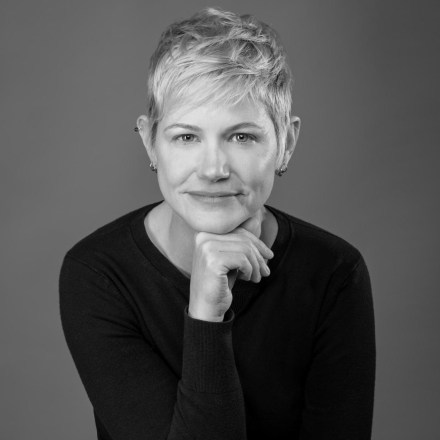
Rainey Reitman is the author of “Transaction Denied: Big Finance’s Power to Punish Speech,” and the co-founder and board president of the Freedom of the Press Foundation.
The Southern Poverty Law Center is preparing for the legal fight of its life with the U.S. government — but its most immediate threat is coming from the financial system, rather than the courts.
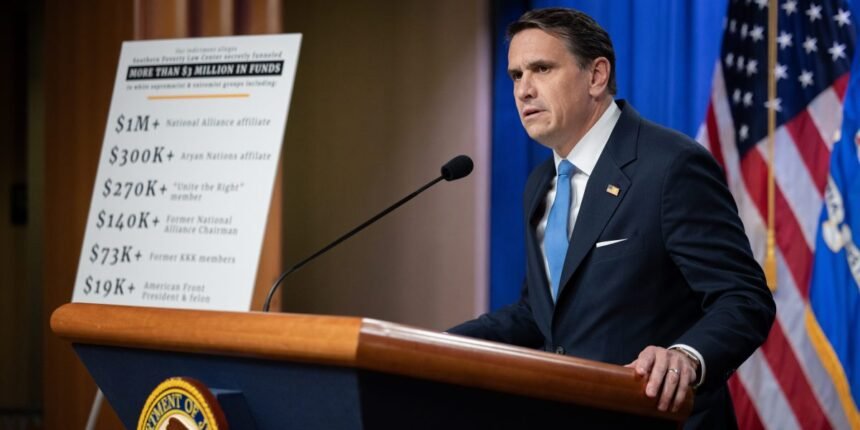
Fidelity Charitable, Charles Schwab affiliate DAFgiving360, and Vanguard Charitable have begun blocking donor-advised fund, or DAF, donations to the SPLC — effectively cutting off one of the organization’s most important funding pipelines at a critical moment. The decision arrives alongside a politicized and bogus indictment announced late last month by the Trump Department of Justice, which is attempting to paint one of the country’s most prominent watchdogs against hate and racial violence as a promoter of it.
A letter from Democratic Reps. Jamie Raskin and Mary Gay Scanlon notes the House Judiciary Committee has received whistleblower reports that the DOJ “ordered the U.S. Attorney’s Office for the Middle District of Alabama to rush through the indictment of the SPLC despite serious concerns about the strength of the case.” As Alabama Reflector editor Brian Lyman wrote, “DOJ has no evidence of SPLC committing a crime. The organization’s real offense, in the eyes of Trump’s toadies, is its lack of obedience.”
But before any courts can assess the merits of the case, the SPLC is already suffering severe financial consequences.
Donor-advised funds have become a key part of American philanthropy. Managed by firms like Fidelity and Vanguard, DAFs allow donors to receive immediate tax benefits while recommending grants to IRS-recognized nonprofits over time. They are one of the primary channels many nonprofits use to connect with donors.
Vanguard, Schwab, and Fidelity are punishing a lawful nonprofit organization that hasn’t been convicted of any wrongdoing.
What’s happening to the SPLC fits a broader pattern of using financial exclusion to punish speakers who challenge those in power. In 2010, after WikiLeaks published State Department cables that embarrassed the U.S. government, major financial institutions — including Visa, Mastercard, and Bank of America — cut off its ability to receive online donations. The punishment happened without WikiLeaks ever having a chance to defend itself in a court of law. The consequences were devastating for the organization, which lost more than 95 percent of its revenue the following year.
That episode is often treated as a one-off, but my research has shown that’s far from the case. I’ve spoken to dozens of law-abiding U.S. citizens who’ve lost financial services due to speech or political viewpoints — groups like VoteAmerica, which had a bank account closed by Chase Bank and was denied an account by First Republic Bank, and the National Committee for Religious Freedom, which also had its bank account shuttered by Chase. I detail these and many other cases in my newly published book, “Transaction Denied: Big Finance’s Power to Punish Speech.”
As with the SPLC, financial censorship sometimes happens to those who have been merely accused of a crime. I’m reminded of the case of a Stop Cop City activist who faced charges for participating in an anti-police protest in Atlanta. The Daily Mail wrote a disparaging news article about her, calling her “an Antifa terrorist who is part of the Atlanta cell.” Shortly after that article was published, Chase closed the bank account she’d held for years, citing “negative media.”
The implications of this type of censorship go beyond the individual accounts impacted; it has a chilling effect on anyone who wants to attend protests or engage in advocacy. Like WikiLeaks before and the SPLC today, organizations and individuals who challenge the status quo must fear drawing the ire of the corporations that wield immense power over our financial lives.
We’ve also seen financial corporations try to police the news, as with a 2022 policy rolled out by PayPal that promised a $2,500 fine to any accounts spreading “misinformation” — a term left conspicuously undefined. PayPal was widely criticized and swiftly retracted the policy. Given the Trump administration’s open hostility to journalism and its novel legal tactics to attack the press, it’s entirely possible that the next target of financial censorship could be a news outlet after the WikiLeaks blockade set the precedent.
Courts have recognized the danger when the government plays a direct role in shuttering financial accounts. In Backpage.com v. Dart, the 7th U.S. Circuit Court of Appeals compared a government official pressuring credit card companies to end services to a website as similar to suffocation, saying it was like “killing a person by cutting off his oxygen supply rather than by shooting him.” The Supreme Court has also seen the dangers of financial companies policing speakers at the behest of the government, noting in National Rifle Association of America v. Vullo that intermediaries like financial companies won’t stand up for free expression because they “will often be less invested in the speaker’s message and thus less likely to risk the regulator’s ire.” But in both of these cases, the government pressure was overt and coercive, triggering the First Amendment protections for the speakers involved.
The case of SPLC is more ambiguous but no less troubling. As of now, there is no public evidence that the government contacted Vanguard, Schwab, or Fidelity directly. Instead, these financial giants are justifying their decisions by pointing to their own terms of service, which they can write and amend as they see fit and which don’t trigger the same First Amendment concerns.
But the ethical and societal concerns are just as important. Vanguard, Schwab, and Fidelity are punishing a lawful nonprofit organization that hasn’t been convicted of any wrongdoing. These companies are under no obligation to shut off SPLC donations at this time. The San Francisco Foundation, which also oversees donor-advised funds, has promised to continue sending DAFs to SPLC, noting, “we are guided by our values and by our donors, not shifting political winds.”
The result of Vanguard, Schwab, and Fidelity’s decisions could be devastating for the SPLC, which will have fewer resources available to fight this politicized prosecution. Regardless of how one feels about the SPLC, we should all object to weaponizing the financial system this way.
This is a problem across the ideological spectrum. The SPLC has itself championed the idea that DAFs should stop the flow of donations to conservative nonprofit organizations it alleges promote hate and racial violence. Pressuring financial intermediaries to advance a political agenda when no court has weighed the merits of a case is no more appropriate in those cases than it is in this one.
What is particularly ironic about this moment is that President Donald Trump himself has spoken out against financial exclusion used as a political weapon, going so far as to sign an executive order against debanking last year that attempted to stop “politicized or unlawful debanking.” But under his administration, one of the country’s most prominent civil rights organizations now faces a sudden constriction of its funding channels.
A financial system that shutters or blocks the accounts of advocacy organizations that have not been convicted of any wrongdoing is not neutral. It is a system that can be used to sideline communities and activists — without ever stepping into a courtroom.