The Guardline
Under a bill gaining traction in its state legislature, Florida could soon have its own spy squad.
The spooks operating in the shadows of the Sunshine State would track and “neutralize” people “whose demonstrated actions, views, or opinions are a threat” to Florida.
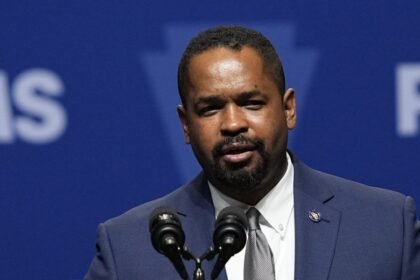
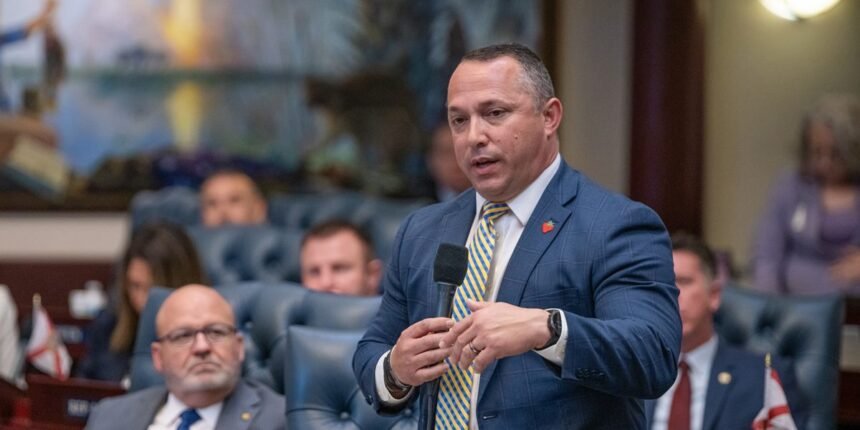
The bill, sponsored by state Rep. Danny Alvarez, a Republican from the Tampa area, would create a state-level counterintelligence and counterterrorism unit inside the Florida Department of Law Enforcement.
Alvarez says the unit is needed to defend against the likes of China and Cuba. Critics, however, see a civil liberties nightmare in the making that could be used to target Muslims and alleged subversives based solely on their views or opinions, much like the FBI’s notorious COINTELPRO program.
During a Tuesday committee hearing, Alvarez said he was preparing to introduce an amendment to address civil liberties concerns and gave a fiery defense of his bill.
“People are looking for boogeymen here. There’s no boogeyman. I’m going to strip everything that makes you question it. You just have to trust me to get to the next committee,” he said. “But while you look for boogeymen, I need to be looking for terrorists. I need to prevent the next bomb.”
Alvarez’s promise of a rewrite did not persuade state Rep. Michele Rayner, the committee Democrat who raised the specter of COINTELPRO, which targeted 1960s radicals using illegal methods. She said that as a black woman working in the civil rights field, she herself had been tracked by law enforcement.
“I don’t know if there’s any iteration of this bill that I could support, because quite frankly that means any of us in this room could be a target,” she said.
The legislation has already passed votes in three Florida House committees, and a companion bill is pending in the state Senate, giving it a stronger chance than most of making it into law.
The proposed unit is already drawing interest from the spy industry. The Israeli spyware company Cellebrite is tracking the bill’s progress through a registered lobbyist, according to state disclosures, which do not list the company’s position. (The lobbyist, Alan Suskey, did not respond to a request for comment.)
September 11’s Long Shadow
Alvarez argues that Florida needs to step up to protect itself, especially in light of two intelligence failures in the past three decades: the September 11 attacks and the more recent New Year’s truck-ramming attack in New Orleans. He said he envisions the unit as a complement to federal law enforcement.
In a statement, Alvarez denied that the new unit would be allowed to open investigations based solely on people’s views.
“It does not authorize investigations based solely on speech,” he told The Intercept. “Any action must be tied to demonstrable conduct and constitutional standards. The First Amendment remains fully intact, and the unit operates under strong statutory safeguards and oversight.”
At a minimum, the current language of the bill leaves the spy squad’s targeting process open to debate. The bill says state intelligence officers are supposed to detect so-called “adversary intelligence entities” and “neutralize” them.
According to the bill, those entities include but are not limited to “any national, foreign, multinational, friendly, competitor, opponent, adversary, or recognized enemy government or nongovernmental organization, company, business, corporation, consortium, group, agency, cell, terrorist, insurgent, guerrilla entity, or person whose demonstrated actions, views, or opinions are a threat or are inimical to the interests of this state and the United States of America.”
The unit will also deploy “tradecraft” against Florida’s enemies, among other language in the bill drawn from the cloak-and-dagger world of espionage that raised questions at the Tuesday hearing.
There’s no specific language in the bill protecting U.S. citizens from being targeted. In a press release last month, Alvarez said he wants it to tackle “both foreign and domestic threats.”
Civil Rights Worries
Bobby Block, executive director of the Florida First Amendment Foundation, said the bill’s sweeping language leaves open the possibility that the new unit could target people simply based on their views, citing the language about actors who hold views deemed “inimical” to Florida.
“What does that mean? If I’m not a white Christian nationalist, does that mean my views are inimical to the values? It begs a lot of questions,” Black said.
The lack of explicit civil liberties protections in the bill worried Black, who pointed out that Congress passed a host of such legislation in the 1970s after the famed Church Committee investigated intelligence community abuses, including COINTELPRO.
With ongoing attacks in Florida against Muslim groups, CAIR-Florida officials think they know who will wind up being a target of the new counterterrorism unit.
In the past few months, Florida Gov. Ron DeSantis joined Texas Gov. Greg Abbott in deeming the Council on American-Islamic Relations, or CAIR, as a “foreign terrorist organization,” a designation the Muslim advocacy group is challenging in court.
“It’s going to be one particular group that is going to be surveilled.”
“If it’s anything like what we’ve seen, which we’re pretty sure it is, it’s going to be one particular group that is going to be surveilled,” Omar Saleh, a civil rights lawyer for CAIR-Florida, told The Intercept. “They are not going to go into churches or synagogues or any other places of worship — they’re going to focus on mosques.”
Saleh said he believes that Alvarez’s legislation is one of several pending attempts to “codify” DeSantis’s executive order if it is struck down by a judge.
Alvarez didn’t respond directly to a question about whether Muslims would be targeted, but he dismissed the idea that the bill would lead to civil liberties violations.
“Anyone pretending that safety equals tyranny is guilty of performance art,” he said. “Some people act as if safety and liberty can’t coexist. In Florida, we believe they can, and they do.”