The Guardline
The United States made war on three continents over three days earlier this month, conducting attacks in Africa, Asia, and South America. During that span, the U.S. also struck a civilian boat in the Pacific Ocean. The globe-spanning scope of the attacks represents one of the few instances since World War II that the United States has been simultaneously involved in armed conflicts with such a wide geographic sweep.
The attacks in Ecuador, Iran, Somalia, and the Eastern Pacific from March 6 through March 8 are part of President Donald Trump’s escalating world war against variously defined “terrorists.” They highlight the administration’s increasing willingness to use the U.S. military as a solution to almost any perceived geopolitical problem.
“All war. All the time. Everywhere,” said Brian Finucane, a former State Department lawyer and specialist in counterterrorism issues and the laws of war, of the wide-ranging attacks over just a few days. “It’s unprecedented given the absence of any fresh congressional authorization.”
This month, Trump has repeatedly referenced his relentless war-making and even lamented it on occasion. “I built the military and rebuilt it in my first term, and we’re using it more than I’d like to use it to be honest with you,” he said.
The region that has seen the most profound increases in this “use” of military power is the Western Hemisphere as part of what Trump and others have called the “Donroe Doctrine.” This bastardization of the 1823 Monroe Doctrine — a unilaterally claimed license to militarily meddle in America’s backyard — has led to attacks on civilian boats in the waters surrounding Latin America and an attack on Venezuela. The most recent location of U.S. attacks in the region, Ecuador, is also the site of the first strike in Trump’s recent three-day, three-war spree.
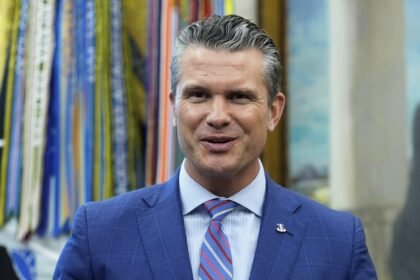
“Yes — as @POTUS has said — we are bombing Narco Terrorists on land as well,” self-styled Secretary of War Pete Hegseth wrote on X on March 6, announcing a new strike in Ecuador. Days later, in a war powers report announcing the introduction of U.S. armed forces into “hostilities” in that country, the White House informed Congress of “military action taken on March 6, 2026, against the facilities of narco-terrorists affiliated with a designated terrorist organization.”
A day later, the U.S. conducted an attack as part of its war-on-terror-holdover conflict in Somalia. “In coordination with the Federal Government of Somalia, U.S. Africa Command (AFRICOM) conducted an airstrike targeting ISIS-Somalia on March 8, 2026,” reads an AFRICOM press release. “The airstrike occurred in the vicinity of the Golis Mountains.” (This frequently attacked region was the site, last year, of what a top Navy admiral called the “largest airstrike in the history of the world.”)
On the same day as the recent AFRICOM strike, U.S. Southern Command announced the latest attack in its campaign targeting so-called drug boats in the Caribbean Sea and Pacific Ocean that have killed almost 160 people in 45 strikes since September. “Six male narco-terrorists were killed during this action,” reads the SOUTHCOM announcement, which was accompanied on X by video footage of a boat exploding into a fireball.
During World War II, the U.S. fought a global war conducting combat operations simultaneously in Africa, Asia, and Europe, as well as limited fighting in North America against Japanese forces in the Aleutian Islands of Alaska in 1942 and 1943. The fight against the Axis powers was, however, a declared war — America’s last — and one discrete conflict. By contrast, Trump’s sprawling collection of undeclared wars include a remnant of the war on terror and several new unconstitutional wars begun by Trump.
“This is why the U.S. Constitution requires congressional authorization before using military force in this manner,” said Finucane. “It’s so the American public and their elected representatives can debate and deliberate whether the costs of a war are justified by the supposed benefits of this military operation. And whether the use of military force is the appropriate tool to solve the problem. And whether it’s even a problem that needs to be solved at all.”
The U.S. has rarely, if ever, conducted attacks — such as the airstrikes in Ecuador, Iran, and Somalia — on three continents over a 72-hour period since World War II. During the Cold War, the U.S. frequently conducted clandestine and covert operations, armed interventions, and wars across multiple continents, but not often analogous attacks. On August 21, 1998, in an early attack on Al Qaeda, the U.S. simultaneously attacked targets in Afghanistan and Sudan with cruise missiles. During the war on terror, the U.S. frequently was involved in simultaneous conflicts and interventions in numerous countries across the Middle East and Africa — and sometimes farther afield. In 2017, for example, a small number of Special Operations forces assisted troops in the Philippines in relieving a siege of the town of Marawi by ISIS-linked militants. U.S. forces were also attacking people in the Middle East and Africa that year, bringing combat to two continents.
The Office of the Secretary of War did not reply to questions concerning the concentration of attacks over such a short period of time and how often this has occurred since World War II.
During his second term Trump has already launched attacks on Ecuador, Iran, Iraq, Nigeria, Somalia, Syria, Venezuela, Yemen, and on civilians in boats in the Caribbean Sea and Pacific Ocean. The Trump administration also claims to be at war with at least 24 cartels and criminal gangs it will not name.
“Today there are so many places in the world where the U.S. government is conducting military operations — including the war at home on migrants — that each event eclipses the last in terms of media attention,” said Stephanie Savell, the director of Brown University’s Costs of War Project. “Each and every case merits a great deal of study and debate. Many U.S. citizens are trying to do this, but news of yet another act of U.S. war violence continues to crop up, drawing media attention away from earlier events and creating huge obstacles to meaningful, sustained work by U.S. citizens to hold their government accountable.”