The Guardline
After more than a month into the U.S.–Israel conflict with Iran, President Donald Trump addressed the nation directly for the first time on Wednesday about why he dragged the country into an unprovoked illegal war. During his wide-ranging speech, Trump made numerous false claims, including repeatedly emphasizing the nuclear threat Iran posed.
The reasons the Trump administration have given for partnering with Israel in this war have been varying and at times include religious undertones, especially from Defense Secretary Pete Hegseth. Hegseth regularly infuses Christian right rhetoric in how he speaks about the war on Iran and the military more broadly.
During a recent religious service at the Pentagon, Hegseth prayed for God to give U.S. troops “wisdom in every decision, endurance for the trial ahead, unbreakable unity, and overwhelming violence of action against those who deserve no mercy.”
“Hegseth belongs to a denomination called the Communion of Reformed Evangelical Churches. … [He] believes that he is carrying out a spiritual and actual war to vanquish a Christian nation’s enemies and protect and promote a Christian nation,” explains investigative journalist Sarah Posner, who covers the religious right, on The Intercept Briefing. “For Hegseth, biblical law is the only law he feels obligated to obey. The law of war, international law governing military conflicts, and human rights and civilian rights in war — he believes don’t apply to him.”
This week on the podcast, Posner speaks to host Jessica Washington about how various factions of the Christian right are shaping U.S. foreign and domestic policies.
“I don’t think the mainstream media has ever taken the Christian right seriously enough. They have consistently viewed Trump’s relationship with white evangelicals as ranging from harmless to purely transactional. When in fact, I think that they’re very deeply ideologically embedded with one another,” she says.
Listen to the full conversation of The Intercept Briefing on Apple Podcasts, Spotify, YouTube, or wherever you listen.
Transcript
Jessica Washington: Welcome to The Intercept Briefing. I’m Jessica Washington, politics reporter at The Intercept.
Akela Lacy: And I’m Akela Lacy, senior politics reporter at the Intercept and co-host of the Intercept Briefing with Jessie.
JW: Before we jump into the news of the week, we have some news too. The Intercept Briefing has been nominated for a Webby Award for best news and politics podcast; help us win by voting for us, please.
AL: Yes, definitely vote for us if you like what we’ve been doing with this podcast. We’ve been working really hard to make it better for you, so show us some love.
JW: You’ll make our day. We will add a link to vote in our show notes.
Now onto the news.
On Wednesday evening, President Donald Trump addressed the nation directly for the first time about why he dragged the U.S. into an unprovoked, illegal war with Iran.
During his rambly 20ish-minute speech, he made numerous false claims, including repeatedly emphasizing the nuclear threat Iran posed. Trump’s own intelligence agency reported last year that “We continue to assess Iran is not building a nuclear weapon.”
Akela, what did you make of Donald Trump’s speech?
AL: He sounded less energetic than he typically does. The overall tone was, again, as you said, rambling, non-committal, and saying obviously extreme things with this very apathetic tone, which I found interesting. There’s a lot of rumors that he’s not in the best of health, so that was running through my mind through this.
But stepping back a little bit, thinking about what was the purpose of this speech, it was obviously an attempt to agenda set and shape the tone on this war — saying that we’re winning the war, that Iran is decimated, both of which we know are not true, but part of the administration’s attempt to control the narrative on this issue and also combat criticism that the president who has campaigned and thrust himself forward as anti-interventionist is doing exactly the opposite.
JW: The war clearly has been getting to Donald Trump. You can see it in his energy, as you just mentioned. We can also see gas prices are rising. Obviously, the Strait of Hormuz being closed as a result of this war is something that is having catastrophic financial impacts. We also have midterms going on.
This is definitely having a broader political impact. Last week, I did a story on Melat Kiros, who is being endorsed by the Sunrise Movement as a part of their broader anti-war campaign. We’re definitely seeing candidates latch onto this idea that you can’t take AIPAC and defense money and be meaningfully anti-war.
Akela, how are you seeing it play out in the midterms and in politics more broadly?
AL: This is becoming a huge midterm issue. There’s a wave of insurgent candidates who have been vocal against the war on Iran and challenged both Democratic leadership and incumbents on their stances, including support from the leading pro-Israel lobbying group, which has backed Trump’s war on Iran, the American Israel Public Affairs Committee.
We’ve also reported on the effort by progressive groups to get Democrats to exploit what is a growing rift among Republicans, both on Iran and on Israel. We reported that the pro-Palestine group Institute for Middle East Understanding Policy Project has been urging Democrats on this issue. They’re also planning to spend $2 million on ads this cycle, hitting Republicans in toss-up districts on Israel, but using that as part of a broader strategy to hit Republicans on rifts on foreign policy, which is obviously the bulk of that being on criticism on Iran right now.
This group, IMEU Policy Project, is one of the groups that met with the Democratic National Committee over concerns about how Gaza could hurt Kamala Harris’s 2024 presidential campaign. This was part of that big story from Axios on Democrats having this secret autopsy on Gaza. Progressive groups are really looking at how to take advantage of this issue in the midterms and take over what they see as a vacuum where Democrats are refusing to do that and leaving opportunities on the table.
That sort of investment on ads from this group is one of the biggest investments from pro-Palestine groups on ad spending this cycle in a cycle where we’ve seen unprecedented levels of outside spending in midterm races where these issues are playing a big role with voters.
JW: You’re right. We’re really seeing this play out in so many different races, this cycle. And Akela, I believe you had a story out this week that also touches on that.
AL: We reported exclusively that Sen. Bernie Sanders endorsed State Assembly Member Claire Valdez on Thursday in New York’s 7th District Democratic Primary, which is of interest to our audience because it is really one of the biggest contests where progressives and socialists and various factions of the left in New York City are battling over who will determine the future of the left under [Mayor] Zohran Mamdani.
So this race has pit progressive groups against each other. Outgoing Rep. Nydia Velázquez has endorsed Brooklyn Borough President Antonio Reynoso, who has backing from progressive groups like the New York Working Families Party, New York City Public Advocate Jumaane Williams, and several city council members.
Then on the Sanders side, where he just jumped in the ring on the side of the socialist faction of the left, which is backing Valdez, including Mamdani, Democratic Socialists of America, and United Auto Workers President Shawn Fain.
This race is not heavily focused on Iran, but Claire Valdez and Reynoso have both been very vocally opposed to the Iran war. We know Bernie Sanders has long been vocal against this war as well. It’s just another example of how this is becoming a new litmus test — again, for mostly progressives, but they’re also using it to put pressure on the broader party.
JW: It’s clear from your story and other reporting from The Intercept over the last month that the war on Iran is really creating political pressure for Republicans and Democrats.
Obviously, we’re mostly talking about a lot of those divisions on the left. But on the right, there are also these real religious pressures that we haven’t spoken about as much. But on the podcast today, I spoke to Sarah Posner, an investigative journalist who covers the religious right about how the Christian right’s apocalyptic views of end times are shaping U.S. foreign and domestic policies.
Sarah is a contributing writer at Talking Points Memo, host of the podcast Reign of Error, and author of the book “Unholy: How White Christian Nationalists Powered the Trump Presidency and the Devastating Legacy They Left Behind.”
This is our conversation.
Sarah, welcome to the Intercept Briefing.
Sarah Posner: Thanks for having me.
JW: There’s so much I want to talk to you about, so let’s dive in. The U.S.–Israel war on Iran has been going on for more than a month now, and its end appears illusive.
Last week, during a religious service at the Pentagon, Defense Secretary Pete Hegseth shared a prayer a chaplain gave to the team who raided Venezuela and kidnapped the former President Nicolás Maduro and his wife. Let’s hear a clip.
Pete Hegseth: Grant this task force clear and righteous targets for violence. Surround them as a shield. Protect the innocent and blameless in their midst. Make their arrows like those of a skilled warrior who returned not empty-handed. Let every round find its mark against the enemies of righteousness and our great nation. Give them wisdom in every decision, endurance for the trial ahead, unbreakable unity, and overwhelming violence of action against those who deserve no mercy.
JW: So Hegseth regularly infuses Christian rhetoric in how he speaks about the war on Iran and the military more broadly. And here, he prays for overwhelming violence and no mercy.
Can you talk about the religious messaging that Hegseth has invoked throughout this war and in other military missions the Trump administration has taken?
SP: Hegseth belongs to a denomination called the Communion of Reformed Evangelical Churches. It is a denomination that adheres to the tenets of a Christian movement called “Christian Reconstructionism.” They believe that the Bible — and in particular, what they consider to be biblical law — governs every aspect of life: your personal life, your life at work, your life as a public figure, your life in civilian life, your life in military life, all of it. It’s a very aggressive Christian supremacist ideology in which Hegseth believes that he is carrying out a spiritual and actual war to vanquish a Christian nation’s enemies and protect and promote a Christian nation.
So for Hegseth, biblical law is the only law he feels obligated to obey. The law of war, international law governing military conflicts, and human rights and civilian rights in war — he believes don’t apply to him.
He expects — I think, through his public statements and these monthly prayer gatherings that he has at the Pentagon auditorium — to have the military follow not just Christianity, but his particular brand of Christianity.
JW: What you just said is really interesting to me. Obviously, muscular Christianity, war-mongering Christianity isn’t new; we can go back to the Crusades. But is there something new, though, in what Hegseth and his ilk are talking about?
SP: It’s not new in terms of the religious right. This idea of Christians taking dominion, not only of America, but the world, has been a driving force of the Christian right’s view of foreign policy and their role in politics domestically. But I think what’s new about Hegseth is how unabashed he is about declaring this in public spaces and enforcing it, or attempting to enforce it in the military.
Another big difference is that we are more accustomed to hearing the popularized Christian Zionist message of “We need to go to war with Iran because they’re an enemy of Israel, and it’s our biblical obligation to defend Israel, and potentially, this is one piece of a series of events that will trigger the end times and the return of Jesus.”
Hegseth comes from a slightly different religious tradition where they don’t adhere to that rapture, tribulation, armageddon narrative. Instead, they believe that they are on a divine mission to establish God’s kingdom on Earth, and then Jesus will come back.
So for him, it’s a much more muscular, aggressive, imperialist kind of messaging. So when you hear him talk about the military action in Venezuela or potentially Greenland and now in Iran, it’s much more focused on that, as opposed to something that centers Israel and centers the armageddon narrative as the reasons why we might be doing this.
JW: I want to dive deeper into that side of things, the kind of Christian Zionist side. You’ve written about John Hagee, a televangelist and founder of Christians United for Israel, who thanked Trump for entering the war while he was standing behind a sign that read “God’s Coming … Operation Epic Fury.”
Who is Hagee, and how does he view the war, and how widely held is that view among the Christian right?
SP: So I think Hagee’s view is more widely held than Hegseth’s view. So Hagee is an 85-year-old megachurch pastor and televangelist from San Antonio, Texas. He’s extremely influential in the evangelical world, and he has been extremely influential in Republican politics.
In 2006, he founded the organization Christians United for Israel, which is the political side of his religious arguments about why Christians should “support Israel.” For many years, he’s argued that Christians have a biblical obligation to support Israel, and by that he means support an Israeli right-wing government, support settlers, and occupation, support the war on Gaza, et cetera.
All of this is very tied up in his view of a Bible prophecy about the sequence of events that will happen prior to Jesus’s return. Now, he would argue that he’s not trying to hasten that return, that all of that will happen on God’s timing, but he’s been arguing that the United States should go to war with Iran for at least 20 years.
The political side of the argument is Iran is acquiring a nuclear weapon. He has argued that whether it was true or not. Then, on the religious side, he argues that a war with Iran will trigger a series of events that will lead to the second coming of Jesus. So he has played both sides of this very successfully.
So he makes the religious plea from his pulpit, and sometimes the political plea from his pulpit too. But then through CUFI — through Christians United for Israel — he makes these political arguments as to why it’s the U.S. obligation to defend Israel from aggression from Iran, or go to war with Israel to preempt aggression from Iran.
But he has built this organization in 20 years to encompass many, many evangelicals who are predominantly Republican voters across the country. He had the ear of the Bush White House, and he had the ear of the first Trump White House. He delivered the benediction when they had a ceremony, when Trump moved the American embassy in Israel from Tel Aviv to Jerusalem.
He has boasted of his strong connection to Trump, and that Trump understands the importance of centrality of Israel, not only to American foreign policy, but to this religious narrative in which Hagee argues that when Jesus comes back, he will rule the world for 1,000 years from a throne on the Temple Mount.
JW: I came across Hagee for the first time covering Daystar, which I’m sure you’re very familiar with. For those who don’t know, it’s essentially an evangelical Christian broadcasting network that hosts a bunch of different televangelists. They’ve got various scandals over the years that we won’t get into, but the important thing to know about them is they’re very much a part of the kind of constant drumbeat of pro-Israel, of this is a sign of the end times, and very much pushing U.S. foreign policy in a direction that is pro-Israel and fueling war in the Middle East. I guess, at least that’s what they’re pushing.
But my question is, how influential are these people, really? How much is this kind of prophesizing around the end times actually pushing U.S. foreign policy?
SP: Evangelicals and particularly charismatic evangelicals like Hagee, people who believe in these prophetic statements, believe that they can receive direct prophecies from God. People who believe that in our midst are modern-day prophets and apostles who are receiving revelations from God that they need to then carry out in their personal or public life. This is a very significant part of the Republican base, and in particular, a very significant part of the Trump base.
In contrast to other Trump supporters and other religious Trump supporters, they’re far more devoted to Trump. They are probably the most loyal to Trump, in part because they believe that he has been very loyal to them, and because they believe that he’s anointed by God to save America and the world.
Those two things are actually very tied together because of the way that both his presidencies have been very influencer, celebrity-driven. Being close to Trump for a burgeoning charismatic influencer is very important, because if you get a little boost from Trump, then more people will watch your YouTube, and more people will follow you on X, or whatever your social media platform is.
Those things are very tied together. It’s not just a one-way street. But Trump is very intermingled with that world. His top religious adviser and director of the White House Faith Office, Paula White, she comes from that world of televangelism and prosperity, gospel preaching, and signs and wonders and miracles — that charismatic Christian world.
So in many ways they are the most influential religious block on Trump, and that obviously is causing a little bit of consternation in the MAGA base currently.
“Being close to Trump for a burgeoning charismatic influencer is very important, because if you get a little boost from Trump, then more people will watch your YouTube.”
JW: Yeah, that makes a lot of sense. One question I have, and this is a little bit of an aside, but is there a penalty for these people to continuously predict the end times?
That seems to be a large part of what we’re talking about with wars in the Middle East. Does anyone pay a price for that?
SP: Almost never. Typically, in this world, once somebody is considered a prophet and they make a prophecy, sometimes they’re right and sometimes they’re wrong. I think that’s why somebody like Hagee is so careful to say this is all God’s timing. A lot of them are careful to say things like, is this a sign of the end times? Might we be experiencing the end times? They phrase it in the form of a question instead of saying, “This is the thing that is definitely going to trigger the end times.”
I think from a marketing standpoint, consistently raising it as a question, it generates a little bit more anticipation and excitement. They’ve been doing this for decades, not just with regard to what’s going on in Iran, but just other things that might be a sign of the end times. So nobody really pays a price because their followers are invested in this world where anticipating and getting ready for, and thinking about and wondering when the end times will happen is just very much embedded in their culture.
JW: I’ve been wondering about the end times and these predictions. My mom is a former Catholic, so I was raised a little bit Catholic, a little bit Unitarian. So there was not all this lore.
SP: Yes, this is definitely very much an evangelical thing and not a Catholic thing, and that is part of the reason why there is friction in the MAGA base over not just the Iran war, but Trump’s closeness with Netanyahu.
JW: You can see this growing division on the right more broadly among some of the loudest MAGA voices, questioning Israel’s influence in American politics. That criticism has been increasing as the Trump administration pursues its illegal war on Iran.
Recently you wrote about Candace Owens and Joe Kent, the former director of the National Counterterrorism Center, who resigned in opposition to the war.
Sarah, what do you make of the growing number of critical MAGA voices, and how they’re framing their opposition. What do you make of Owens in particular and her messaging? What’s the end game?
SP: Candace Owens is a raging antisemite. Every discussion of Owens needs to acknowledge that. So when she talks about being anti-Israel or being anti-Zionist, her criticisms are not just legitimate criticisms of the Israeli governments and the Israeli military’s actions. All of her criticisms are imbued with antisemitic conspiracy theories and rank antisemitism, Holocaust denial, that sort of thing. Just so that we’re on the table with that.
JW: Good disclaimer.
SP: But I think that she and some of her colleagues and allies in the far-right Catholic MAGA world are trying to do a sort of horseshoe thing, where they want leftists who are anti-Zionist or anti-Israel, to give them a pat on the back for being the right-wingers who have come out against Israel’s actions and Israel’s policies, and the American relationship with Israel. Owens and her allies are making this not just about Israel, but also about Catholics and evangelicals.
For most mainstream Catholics, even conservative ones — ones who you might think of as being George W. Bush Republicans, they’re anti-same-sex marriage, anti-abortion, that sort of thing — but the Israel stuff just isn’t that important to them. She is trying to make it important to far-right Catholics. So she’s trying to make it important by starting a little intra-MAGA war between Catholics and evangelicals over this issue.
She and her allies have tried to make the argument that it’s a violation of their religious freedom to have to submit to or agree with these kinds of policies that Christian Zionists promote because that is not part of their Catholic faith.
Now, it’s true that the whole end-times scenario that someone like John Hagee promotes is not part of the Catholic faith, but Owens always doubles down on the antisemitism on top of that. So it’s a complicated world.
“White evangelicals make up a huge part of a very important part of Trump’s base, and they’re very homogenous in this way.”
The other thing about trying to determine how big is this MAGA rift, really. One thing that’s important to understand is that white evangelicals make up a huge part of a very important part of Trump’s base, and they’re very homogenous in this way. Eighty percent of white evangelicals voted for Trump, and a huge segment of them are Christian Zionists.
Catholics are more split 60-40, 50-50 on whether they’re Democrats or Republicans. And Catholic converts like Candace Owens, who are extremely far right, make up a very small segment of Catholics as a whole, even a small segment of Republican Catholics.
So I think when we’re trying to assess her influence, in a way we’re comparing apples and oranges because we’re trying to compare someone who has had a podcast and a huge following on Twitter for a few years with a movement that has spent decades making this end times theory, or this end times narrative, a core part of what their followers believe.
[Break]
JW: So now I want to talk about another kind of Christian right influencer: the Heritage Foundation, obviously the people behind Project 2025, but their new report is receiving less attention. It’s called “Saving America by Saving the Family: A Foundation For The Next 250 Years.”
This report outlines a vision that “restores” what they call the “natural family,” defined as marriage between a man and a woman, and how that mission is fundamental to saving America’s future. Can you talk about how we’re seeing that vision show up in policymaking and in bills like the SAVE [Safeguard American Voter Eligibility] Act?
SP: In terms of policymaking, I think that they’re trying to [push] a lot of small bore things through, say, the Department of Health and Human Services or the FDA. They want to try to ban mifepristone so that abortion will be inaccessible to people. They want to do things to promote adoption by Christian families instead of non-Christian families or instead of same-sex couples.
Every anti-LGBTQ policy is a furtherance of this “natural family” policy in that Heritage Foundation document. They want to, through anti-abortion measures, enforce motherhood for women and also create an image of the “natural family marriage between a man and a woman.”
It’s an explicit anti-LGBTQ agenda, and they’ve been extremely, explicitly anti-trans. From their perspective, trans people threaten their whole idea of a binary sex — men and women, and that’s it. It explains a lot about why they’re going so hard after trans people’s rights.
With regard to the SAVE Act, I’m not sure what they’re doing there. Because the SAVE Act would punish women who took their husband’s names because then you wouldn’t be able to register to vote unless you got your birth certificate, which then your birth name wouldn’t match your current name. So it creates a whole host of problems. That to me is an odd thing for them to be pushing right now, but it’s also in line with a segment of the religious right, including Pete Hegseth’s pastor that believes that women shouldn’t even vote. But I feel like they’re stepping all over themselves with what they’re proposing in the SAVE Act.
JW: Yeah, and I wanted to get into that. The report doesn’t explicitly mention transgender people. They just say gender ideology throughout their entire Save the Family report. But it’s essentially just ragging on transgender people, queer people. A lot of ragging on feminists, birth control.
There’s obviously discussion of how to have more families, more kids. But it almost seems more focused on enemies than it does on actually promoting kids and families. Should we understand it as a document that actually is trying to push for more kids and families, or is this about mandating a specific type of Christian lifestyle?
SP: The latter. In order to do that, they have to marginalize other people. So in their view, if trans people exist, then there is no binary between men and women in which these gender roles are very clearly defined and delineated.
JW: To you, it’s much more about, OK, how do we make people live the lives that we want them to live? And how do we find enemies who we can terrorize to make that happen?
SP: Well, think about it this way, that what they are proposing runs counter to the way American culture has been for the last 50 or 60, 70 years and runs counter to — not Dobbs, obviously, that’s an exception — but it runs counter to things that have become more accepted, like marriage equality and I wouldn’t include trans rights in that category because it hasn’t been accepted. I think that is what is driving them to create enemies, in order to make this “traditional family” seem more appealing to people or seem under threat by something.
“I think that is what is driving them to create enemies, in order to make this ‘traditional family’ seem more appealing to people or seem under threat by something.”
If the traditional family is the ideal — where there’s a man and a woman and kids, and the woman stays home and doesn’t go to work and all of that — then all of these other people, women who don’t get married, single moms, trans people, same-sex couples, they’re a threat to that. They see it as a threat. They would consider a threat to their religious freedom because they think that their religion demands these kinds of family relationships. And so it’s a very radical document. I think that there are people within the administration who take it very seriously.
JW: We haven’t discussed race yet, and I think that’s always the kind of underlying thing in the corner when you’re talking about Christian nationalism, specifically white Christian nationalism. In this document they only mention Black people so much as to say, not enough Black people are getting married, that’s a problem, and then leave that to the side. They don’t mention race generally, but how do you view race in this vision?
But I think that it is a clear broadside just against any kind of culture that they consider to be non-compliant with their idea of the traditional family whether that’s women who have chosen not to get married, moms who’ve chosen not to get married. When you see how they’ve tried to marginalize, say, trans people from public life, this gives you a lot of insight into how they view, let’s say, non-complying people with their view of what America should be.
JW: While we’re talking about the Save the Family and the religious right’s views on marriage and family and race, in that regard, I also wanted to ask you about their views on immigration and race. How do you perceive the Christian right when it comes to this issue?
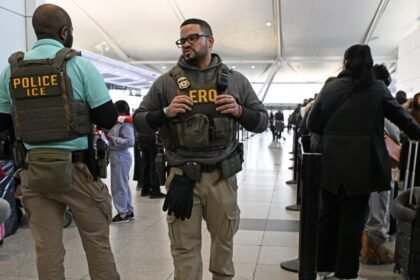
SP: White evangelicals are among Trump’s staunchest supporters when it comes to immigration. When you look at the polling data about their views of his position on immigration, in general, and in particular, the ICE crackdowns in Minneapolis and other cities, white evangelicals are among his staunchest supporters. And this is very much tied into their view of what a Christian nation is, and their acceptance of the argument, their embrace of the argument that undocumented people are necessarily criminals because just the act of having come here “illegally” is a crime. That is very much tied into their perception that America was founded as a Christian nation. Somehow that was taken away from us by many things that happened over the course of the 20th century, including immigration, including the Civil Rights Act, including women’s rights, LGBTQ rights, all of that. So when they talk about restoring the Christian nation, what they’re really talking about is restoring a white Christian nation.
JW: I want to get into the deeper, the broader impact of these groups. Your podcast Reign of Error illustrates how the Christian right isn’t a fringe movement, but how its various figures, groups, and sects are in the halls of power shaping policies and remaking America from local offices to the White House.
Can you talk about the infrastructure the Christian right has been able to build over the years to wield that level of influence and policymaking?
SP: I think a lot of people think of the religious right as being a lot of megachurch pastors at the pulpit telling people how to vote and that it’s just people getting instructions every November and going to the polls and hitting the lever for the Republican candidate.
“They have built mechanisms for creating and enforcing this political ideology, not only in their churches, but through television shows, conferences, books … YouTube, X, TikTok.”
It’s much thicker and deeper than that because they have built mechanisms for creating and enforcing this political ideology, not only in their churches, but through television shows, conferences, books, and with the advent of social media, of course, YouTube, X, TikTok, all of the social media that they have at their disposal, and so you have that element of it. You have political organizations that work with religious leaders to recruit religious people, and even pastors to run for office and to organize voters to go to the polls on Election Day.
You have organizations that were created to counter institutions that liberals and the left had built. So to counter the ACLU, they founded the Alliance Defending Freedom, which has litigated most of the cases, producing some of the Supreme Court’s worst precedents in recent years, including the Dobbs decision. ADF was behind challenging the ban on conversion therapy in Colorado that the Supreme Court ruled on recently.
So you have all of these things together. You have the Heritage Foundation, which was created back in the 1970s to counter the Brookings Institution — which is not really like a leftist organization by any stretch of the imagination, but that’s how they perceived it. So you have these different layers of convincing people and keeping them engaged in the political project and the political process.
Then you also have on the legal front, not just these legal organizations, but Christian law schools that are educating the next generation of Christian lawyers who will go out and litigate these cases, maybe become judges. So they have built an infrastructure, a multi-layered infrastructure that is intended to be intergenerational, that’s intended to last for decades. That’s not intended only to run from election cycle to election cycle.
They spent 50 years to overturn Roe vs. Wade. They didn’t give up. They chipped away for many decades. When you think about that, they worked at the state level to chip away at it. They worked the legal process to chip away at Roe at the state level. They chipped away at abortion rights.
At the same time, when I talk about the multi-layered, they had institutions and organizations that helped train judges to rule from these right-wing perspectives, that would advocate for judges that were nominated to the bench by George W. Bush or Donald Trump to become District Court judges, appellate judges, Supreme Court justices. That’s what I’m talking about when I say it’s a multi-layered infrastructure because you have all of these things working together. There’s never a sense of victory like, “Oh, we got that done, yay us, and now we’re gonna take a break.” No, they did not even stop for a minute after they overturned Roe vs. Wade. Now they’re on to trying to ban mifepristone.
It’s important for people to understand that they never see any victory as their final achievement. It’s just one piece in a long road that they’re very dedicated to trotting.
JW: Given this relentlessness that you’re describing and the level of influence that we’re talking about here, especially even within the Trump administration, do you think that mainstream media is taking the Christian rights seriously enough?
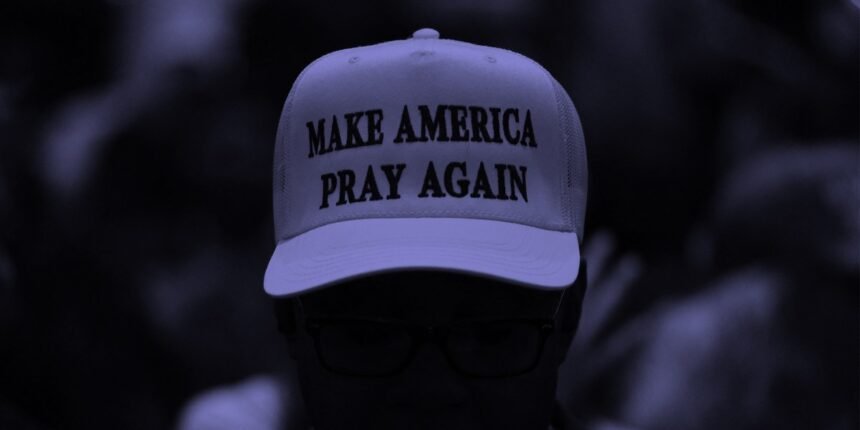
SP: I don’t think the mainstream media has ever taken the Christian right seriously enough. They have consistently viewed Trump’s relationship with white evangelicals as ranging from harmless to purely transactional. When in fact, I think that they’re very deeply ideologically embedded with one another.
It’s partially a function of a little bit of nervousness about even touching religion, that they don’t want to be seen as being critical of somebody’s religious beliefs or religious practices. But I think it has taken a long time for the media to wake up to how extreme they are and how successful they’ve been at capturing, not just the Republican Party but Trump in particular.
JW: That was really informative and pretty alarming, but we’re going to leave it there. Thanks, Sarah, for joining me on the Intercept Briefing.
SP: Thank you, Jessica.
JW: To keep up with how the Christian right is shaping policy in the U.S. today, follow Sarah’s work at Talking Points Memo and her podcast Reign of Error, which I highly, highly recommend.
Before we go, we’d love it if you helped The Intercept Briefing win its first Webby Award for best news and politics podcast. So please vote for us. We’ll add a link to vote in our show notes. Thanks so much!
That does it for this episode.
This episode was produced by Laura Flynn. Ben Muessig is our editor-in-chief. Maia Hibbett is our managing editor. Chelsey B. Coombs is our social and video producer. Fei Liu is our product and design manager. Nara Shin is our copy editor. Will Stanton mixed our show. Legal review by David Bralow.
Slip Stream provided our theme music.
This show and our reporting at The Intercept doesn’t exist without you. Your donation, no matter the amount, makes a real difference. Keep our investigations free and fearless at theintercept.com/join.
If you haven’t already, please subscribe to The Intercept Briefing wherever you listen to podcasts. Do leave us a rating or a review, it helps other listeners to find us.
Let us know what you think of this episode, or If you want to send us a general message, email us at podcasts@theintercept.com.
Until next time, I’m Jessica Washington.