The Guardline
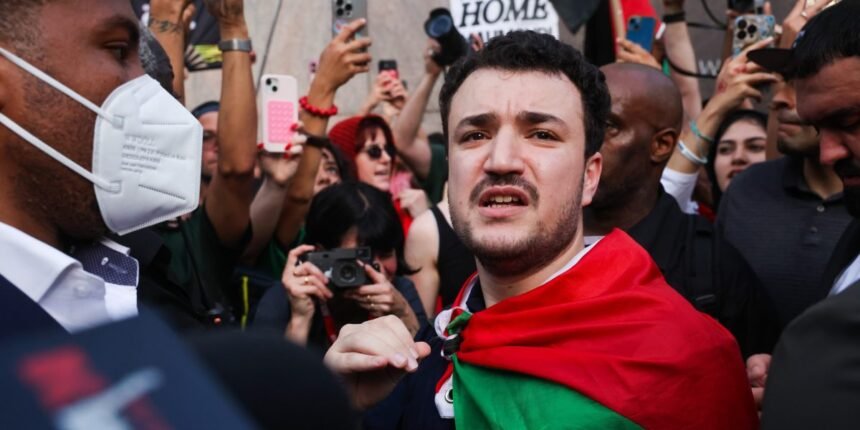
A recently released FBI file shines new light on the days immediately leading up to the arrest of then-Columbia University student and Palestinian rights activist Mahmoud Khalil.
On March 6 of last year, two days before unidentified officers from Immigration and Customs Enforcement abducted and arrested Khalil at his home, the FBI received an anonymous tip claiming that Khalil, listed incorrectly as a 22-year-old, had called for “violence on behalf of Hamas.”
According to the heavily redacted documents, as of March 19, 2025, the FBI had closed an investigation into the tip and determined that Khalil “does not warrant further FBI investigation.” But by then, ICE had already secretly taken Khalil, now 31, thousands of miles away to a detention center in Louisiana. Despite the FBI’s decision to close the tip, the Trump administration continued to paint Khalil as a “Hamas supporter” and a threat to national security.
It’s unclear if the FBI tip was directly related to Khalil’s ICE arrest, and the FBI did not respond to The Intercept’s question about whether the tip was shared with ICE. But Hamid Bendaas, a spokesperson at the Institute for Middle East Understanding, which has worked with Khalil since his arrest, said the timing reflects “a threat to us all.”
Though the FBI document says Khalil did not warrant further investigation, “that didn’t stop ICE from holding him in a detention center and separating him from his wife and newborn son for months,” Bendaas said.
The document comes to light as the Trump administration has fast-tracked Khalil’s deportation case, which Khalil’s legal team argues is a form of retaliation against his protected political speech in support of Palestine. Khalil’s team received the FBI document, which has not been previously reported, via a lawsuit over a public records request and shared it exclusively with The Intercept.
Khalil was the first of thousands of students the Trump administration targeted for deportation over First Amendment-protected speech in support of Palestine or criticizing Israel. The Trump administration exploited an obscure provision in immigration law to claim that Khalil and other students, including Mohsen Mahdawi and Rümeysa Öztürk, presented a threat to U.S. foreign policy interests. Secretary of State Marco Rubio, who ordered Khalil to be deported, has repeatedly claimed that he sympathized with terrorists, echoing claims from far-right doxing groups that had targeted Khalil in the months leading up to his arrest. Trump’s unprecedented crackdown came after years of similar attacks on pro-Palestine students that gained speed under former President Joe Biden.
“Under Trump’s rogue presidency being led by extremists and conspiracy theorists,” Bendaas said, “any of us can be kidnapped by federal agents in the middle of the night simply for speaking against U.S. support for Israel’s genocide, no matter what the facts or Constitution says.”
The Center for Constitutional Rights, part of Khalil’s legal team, submitted a request for public documents related to his arrest nearly a year ago, on May 29, 2025. After denials and delays, CCR filed a lawsuit on November 20 claiming that federal agencies, including the FBI, had improperly withheld the records. CCR said it has since received other documents from the Department of Justice and is expecting more from other agencies in the coming months.
“Despite the FBI closing its investigation with no findings to support the accusation, the Trump administration continued to label Mr. Khalil a supporter of Hamas in public comments,” said CCR staff attorney Samah Sisay. “This document further supports our argument that the Trump administration had no legitimate reason to target Mr. Khalil besides his free speech in support of Palestine.”
In a statement to The Intercept, an FBI spokesperson said, “We let documents obtained through the FOIA process speak for themselves and decline to comment further.”
Reacting to the FBI file, an attorney at Palestine Legal condemned the Trump administration’s approach but called it “representative of the tactics used more broadly against Palestine activists.”
“Revelations that false reports were made against Mahmoud prior to his government sanctioned kidnapping, and that the administration continued to make false claims that Mahmoud posed a danger, even though the FBI found these claims to be unsubstantiated, are highly representative of this administration’s broader approach of acting first and making up justifications later, with no regard for truth or the findings of the administration’s own experts,” said Zoha Khalili, a senior managing attorney at Palestine Legal. “Around the world, people who demand freedom, equality, liberation, and the basic necessities of life for Palestinians have been smeared, silenced, investigated, and even imprisoned for their advocacy.”
Khalil’s team also plans to appeal the Board of Immigration Appeals order rejecting Khalil’s appeal to terminate his deportation proceedings. He is still fighting a separate federal habeas corpus case and cannot be deported while the case proceeds.
Update: May 12, 2026, 4:06 p.m. ET
This story has been updated with a comment from an attorney at Palestine Legal sent after publication.