The Guardline
Jonathan Reiss is a co-founder of the Media and Democracy Project.
Every time you turn around recently, it feels like there’s new reporting about insiders cashing in on prediction markets. On Thursday, a U.S. Army Special Forces soldier who was involved in the raid to capture Nicolás Maduro in Venezuela was arrested on charges that he used classified information to make more than $400,000 by betting on the operation before it happened. In the hours before the U.S. attacked Iran, hundreds of anonymous bets over $1,000 were placed on the U.S. striking Iran by the next day, which the New York Times said suggested that some users might’ve “seen the strike coming.”
Prediction markets, such as industry leaders Polymarket and Kalshi, have exploded in popularity. They create or exacerbate an array of problems, but at the Media and Democracy Project, or MAD, we believe they have the potential to severely harm the way news is reported, perceived, and engaged with — threats that deserve far more attention from the public.
MAD calls the use of prediction markets in news stories “casino journalism.” There is too much already, and it is likely to get much worse if not nipped in the bud. But we are optimistic it can be stopped if news organizations recognize the threat and respond.
Earlier this year, the Wall Street Journal’s publisher, Dow Jones, announced a partnership with Polymarket. The Associated Press, CNN, Substack, and CNBC have all made similar deals, the terms of which have not been disclosed. So it was extremely troubling to see the Wall Street Journal report that “Polymarket Bets See Over 70% Chance of U.S. Forces Entering Iran in Next Month” on March 30, and not just because of the fear of a broader war. This so-called news story provided none of the journalistic insight that was touted when the partnership was announced — just the betting odds. It looks more like an advertisement for their new partner than real journalism and, while the betting market was active, had a link to Polymarket.
Do news organizations and journalists really want to gamify the news? What are the long-term impacts on a paper if they make a practice of such reporting? Should news outlets see the betting markets as partners? News organizations, the practice of journalism, and the public are all much better served if the media outlets instead set policies constraining the use of these markets in their reporting and altogether forbidding financial deals where the outlet profits from the success of the prediction markets.
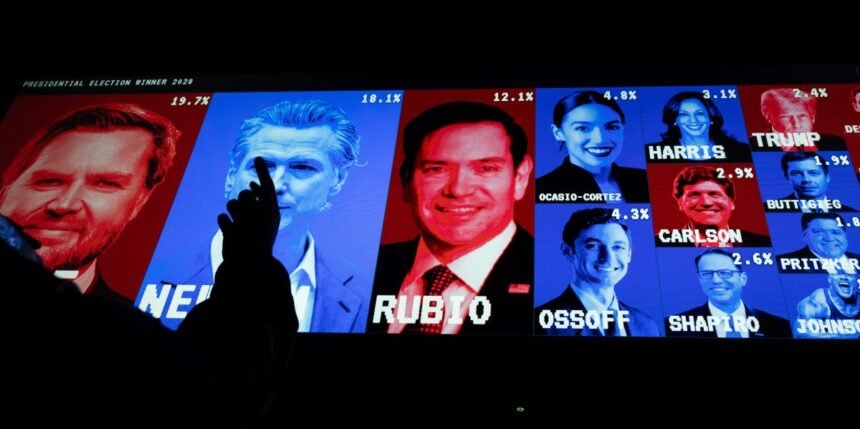
MAD has long called for less horse-race journalism and more substantive reporting. Many others have done so for even longer, including New York University journalism professor Jay Rosen, who has pushed for a focus on “not the odds, but the stakes.” But prediction markets are horse-race journalism taken to its most cynical end point, one that will only serve to supercharge reporting on who’s up and who’s down at any given moment, particularly because these markets are open 24/7.
Prediction markets turn events that have an impact on people’s lives — and carry a real human cost — into pure entertainment.
Tarek Mansour, the CEO of Kalshi, has said it does a “very, very good job at distilling information and surfacing truth to people,” even as it seeks to “financialize everything.” He presents it as providing a new, better source of information and as changing the way their readers digest the news. In an interview with the Financial Times in February, he said, “Prediction markets don’t make money off somebody’s losses, they make money off somebody’s engagement.” But the type of engagement matters a great deal. Increasing the nicotine content of cigarettes increases smokers’ “engagement” with the tobacco industry. Gambling is also addictive; as sports betting has become commonplace, participants have found that, over time, they mostly lose. Promoting these markets as part of the news is likely to damage readers’ trust and can also harm their overall well-being.
Quite apart from the questionable news content of prediction market bets, the news industry needs to recognize how implicated it is in shaping how these markets function. Most of the “propositions” offered on these markets are based on news reports; reporters provide the raw material on which these bets are made. In effect, traders on prediction markets are betting on the content of news stories.
This has tremendous potential to be a corrupting influence on journalists. An Israeli journalist recently received death threats over his refusal to rewrite his report on an Iranian missile strike, on which $23 million of prediction market “investments” were riding. As the markets become larger, and their use in news increases, the incentive for market manipulation will also grow. There could be intense temptation for insider trading of all kinds that would destroy the credibility and integrity of these markets, bringing the news business down with it. There are already many worrisome incidents related to these markets, such as the soldier who enriched himself based on classified info. Centering prediction markets will create a substantial risk of scandals that will implicate and embarrass news organizations.
MAD is heartened that most news outlets have not engaged in deals or embedded prediction market prices as news. The New York Times’ Guidelines on Integrity begin with the statement, “Our greatest strength is the authority and reputation of The Times. We must do nothing that would undermine or dilute it and everything possible to enhance it.” So we are hopeful that the Times and other responsible news outlets will defend their reputations by setting clear public policies limiting how prediction markets may be used and what kinds of business relationships they will engage in.
Any news organizations that have already signed on with Kalshi or Polymarket should publicly disclose the terms of these relationships. Reporters should be forbidden from citing the markets as valid forecasts and should be barred from using the platforms themselves. We encourage more reporting on substantive impacts of governmental actions and less speculation on the prospects that the policies will be implemented.
Horse-race journalism was already a detriment to nurturing an informed citizenry. But casino journalism has no place at all in any functioning democracy.