The Guardline
Trump Adds to America’s Lethal Legacy of Treachery
Who can even remember it now? That giddy moment less than five months ago when President Donald Trump called on the Iranian people to rise up and take on the ruling regime. “When we are finished, take over your government. It will be yours to take. America is backing you with overwhelming strength,” Trump promised on February 28. “This is the moment for action. Do not let it pass.”
Like a million Trump pledges before it, it was part bluster, part bullshit. Last week, Trump admitted as much, stating he knew the Iranian opposition had no chance against the ruling regime. “Nobody is gonna take over. They have no guns, and the other side has machine guns,” he said at the NATO summit in Ankara, Turkey. “They can’t take over because they’re dead.” This was not, however, just a routine Trumpian lie; it was also part of a grand American tradition.
They say baseball is America’s national pastime, but you could make a solid case that it’s actually betrayal. Washington loves nothing more than to sell out its friends, betray its partners, leave its allies in a lurch, and call people into the streets and then abandon them to slaughter.
In an interview with the Washington Post on the Iran war’s first day, Trump said that “freedom for the people” of Iran was the goal of the conflict. It never was. But what would be lost in luring Iranian activists into the streets — aside from Iranian lives?
This type of lethal double-cross has been America’s stock-in-trade since its infancy — and has continued across the globe no matter the conflict, era, or president.
During the American Revolution, most Native peoples viewed America’s colonial rebels with skepticism and attempted to remain neutral or sided with the British. But some placed a bet on the revolutionaries, assuming that they would be rewarded with fair, if not preferential, treatment in the event of a win by the colonies. They were, in the end, wrong to assume their allies would act honorably.
The Oneida, for example, split from most of the Haudenosaunee Confederacy — the Mohawk, the Onondaga, and others — who allied with the British. “There would have probably been a lot more death for the Continental Army,” according to Heather Bruegl, a public historian and citizen of the Oneida Nation of Wisconsin who noted that the Oneida altered the tide of the war by breaking the famine at Valley Forge.
Even the Pentagon lauds the Oneida Nation, noting its “support for American independence saw the Continental Army through its lowest point in the Revolutionary War” but admitted that while Congress offered thanks, “that gratitude did not always translate into equitable treatment.” This is nothing but a mealy-mouthed reference to the fact that at the end of the Revolutionary War, the Oneida Homelands were estimated at between five to six million acres of land but were reduced to just 32 acres by the early 1900s.
The Lenape people also threw in with the American rebels, signing a treaty that pledged their backing to the nascent United States in exchange for protection and the creation of a 14th state, governed by Native Americans. The agreement fell apart within weeks. As the official State Department history puts it:
First, the Lenape leader White Eyes died. While American officials insisted White Eyes died from smallpox as the cause, evidence indicated members of the [colonial] militia murdered him, and the circumstances remain unclear to this day. This act showed the Lenape that the Americans did not value nor honor the importance of kinship alliances.
Despite a failure by the Americans to protect Lenape lands, some Lenape warriors nonetheless assisted the Continental Army and a delegation went to the Continental Congress to attempt to repair the pact. But the Americans made no effort to salvage the agreement and said the Lenape had broken the treaty. Worse still, in 1782, Pennsylvania militia massacred a neutral, pacifist Christian Lenape community in Gnadenhutten, bludgeoning 96 unarmed people to death. Thirty-nine of those killed, many with a hammer to the back of the head as they prayed for mercy, were children.
Deception and Disloyalty
Still, it wasn’t until the 20th century that America hit its stride, selling out allies at an unbelievable clip. Approximately 250,000 Filipinos joined the U.S. military, for example, and fought for America during World War II. Washington promised them the same health and pension benefits as their American counterparts, a pledge that was even reaffirmed at the close of the war. But then Congress passed and President Harry Truman signed the Rescission Act of 1946 that said that the service of Filipinos “shall not be deemed to be or to have been service in the military or national forces of the United States or any component thereof or any law of the United States conferring rights, privileges or benefits.”
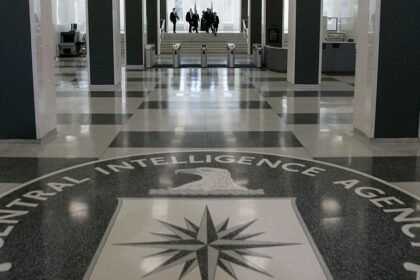
Also during World War II, the U.S. Office of Strategic Services, a forerunner of the CIA, armed, trained, and supported a guerrilla force in French colonial Vietnam fighting the Japanese and their French quislings. In 1945, with the Japanese defeated, the top local OSS agent — the charismatic Ho Chi Minh — proclaimed Vietnam’s independence, using the words of the U.S. Declaration of Independence as his template. “All men are created equal,” he told a crowd of half a million Vietnamese in Hanoi. “The Creator has given us certain inviolable rights: the right to life, the right to be free, and the right to achieve happiness.”
Ho thought his allies would back him. He was wrong. They instead turned on Ho and his comrades, funded the French reconquest of Vietnam, and spent the better part of the next three decades propping up an ever more corrupt and repressive rump state in South Vietnam while advising, arming, training, and funding an allied South Vietnamese military, and fought a long, destructive war against revolutionaries in the South and Ho’s North Vietnam that left millions dead, wounded, or displaced.
Eager to turn the conflict over to the Potemkin state they fostered and extricate the U.S., President Richard Nixon pledged to re-enter the war with the “full force” of American power, to induce the despotic South Vietnamese government to sign a 1973 peace agreement with the North. Two years later, the U.S. ignored this guarantee and abandoned South Vietnam and millions of allies, collaborators, and hangers-on.
No single moment sums up this betrayal better than an incident recounted by Stuart Herrington, a counterintelligence officer who spent 30 years in the Army. Herrington made a vow to hundreds of Vietnamese who crowded onto U.S. Embassy grounds in Saigon on the final day of the U.S. evacuation in 1975. “Nobody is going to be left behind,” he assured them. One of the 420 Vietnamese who was there remembered his words: “I promise me and my soldiers will be the last ones to leave the embassy.” Herrington promised them that a large helicopter was coming to rescue them and then excused himself to go “take a leak.” Scurrying off into the shadows, Harrington slipped into the embassy building and onto a helicopter, abandoning those to whom he’d just given his word.
A U.S.-backed military regime in neighboring Cambodia also crumbled in 1975 and was abandoned to face the genocide of the Khmer Rouge. A proxy army in neighboring Laos was similarly discarded in the 1970s. Decades later, surviving troops and their families were still in hiding and on the run. “We want America to give us a place to live,” Va Chang, a then-60-year-old veteran found in the jungle in the mid-2000s told a reporter. “If the Americans don’t want to do that, they should drop a big bomb on us and end our misery.”
Prior to a 1956 uprising, the CIA air-dropped leaflets into Hungary with messages like “The regime is weaker than you think.” János Rainer, director of Hungary’s 1956 Institute Foundation, said, “Hungarians clearly got the impression that, in the event of a rebellion, the U.S. would support them effectively.” But the U.S. stood aside as the Soviet Union crushed the uprising, killing and wounding almost 20,000, imprisoning 13,000, and executing 229 others following trials, according to one count. The writer Tamás Aczél, who fled to the U.S. in 1956, wrote that Hungarians had been naive to put their faith in U.S. calls for “liberation” in Eastern Europe, writing: “[W]e learned what we didn’t know — that the West had written off these countries and only their propaganda machines pretended otherwise.”
In an even more egregious exercise, the CIA trained and armed Cuban exiles, landing them at the Bay of Pigs in 1961. The counterrevolutionaries were promised ample air cover — “the sky will be yours” — and led to believe they would be supported by 15,000 American troops. But the invasion of Cuba went south quickly, President John F. Kennedy canceled a second round of airstrikes, and the exiles ran out of ammunition, were pushed back into the sea, and were abandoned. Grayston Lynch, a CIA operative who participated in the landing, recounted that he called two American destroyers on the scene for help but was told by the captain of one: “My orders are not to become involved.”
While the U.S. has betrayed people the world over, one group stands preeminent in the sheer amount of American treachery. “Nothing in this world is certain except death, taxes, and America betraying the Kurds,” wrote Jon Schwarz for The Intercept in October 2019, recounting eight instances from the 1920s to that very moment when the U.S. used independence-seeking Kurdish peoples to further American aims and then cut them loose.
One of the most craven of these instances was a Nixon-era plot with then U.S.-allied Iran to use the Kurds to bleed the then-Soviet-aligned Iraqis.
Once the Kurds outlived their usefulness, however, U.S. aid was then cut and the Iraqi military killed thousands as the Kurds begged for help. As a congressional report later admitted, “Even in the context of covert action ours was a cynical enterprise.” But Secretary of State Henry Kissinger shrugged at the slaughter, explaining “covert action should not be confused with missionary work.”
As the U.S. bombed Iraq during the Gulf War in 1991, President George H.W. Bush called on “the Iraqi military and Iraqi people to take matters into their own hands, to force Saddam Hussein, the dictator, to step aside.” Both Shias in southern Iraq and Kurds in northern Iraq answered the call, expecting U.S. military support. It never came, Hussein stayed in power, and some 20,000 Kurds and up to 60,000 Shias who rose up were slaughtered by the Iraqi military.
More than a decade later, another failed U.S. war in the Middle East fostered the rise of the Islamic State group and the creation of a brutal caliphate across a wide swath of Iraq and Syria. Between 2014 and 2017, Kurdish-led forces dismantled this quasi-state for the U.S. But after 93 percent of Iraqi Kurds voted for independence in 2017, America was nowhere to be found. Within weeks, Iraqi federal troops and Iranian-backed Hashd al-Shaabi militias launched a coordinated offensive. The Kurds lost the city of Kirkuk, the Nineveh Plains, and roughly 40 percent of the territory their fighters had held. Washington offered no military response and no assistance — not even a diplomatic protest to the government in Baghdad. Then in 2019, President Donald Trump withdrew U.S. troops from northeastern Syria, opening the door for a Turkish invasion of the very land the Kurdish-led Syrian Democratic Forces had taken from ISIS at the cost of more than 20,000 lives.
Hundreds of thousands of locals also served alongside U.S. troops, diplomats, intelligence officers, and contractors during the failed Afghan War. Despite 20 years of Americans mouthing the phrase “shohna ba shohna” (“shoulder to shoulder” in Dari), it meant very little. In the chaotic 2021 U.S. withdrawal from Afghanistan, most Afghans who fought on the side of the U.S. and its coalition partners were left behind as the Taliban retook the country.
But even those who made it out have been abandoned. In April, the Trump administration floated plans to send Afghan allies stranded at Camp As Sayliyah in Qatar to the Democratic Republic of Congo. While that plan was reportedly shelved, rumblings of casting them to the winds elsewhere remain. And in May, the Department of Homeland Security formally ended Temporary Protected Status for roughly 10,000 Afghans who fled after the Taliban’s return to power.
“We made a promise to those who helped America in our time of need, and it’s wrong to turn our backs on them,” Rep. Jason Crow, D-Colo., a member of the House Armed Services Committee and a combat veteran who fought in Afghanistan, said last month, noting that they will likely face torture, persecution, and even death if they are returned to Afghanistan.
Won’t Get Fooled Again?
The principal proverb of personal responsibility has been kicking around since at least the 1600s: “Fool me once, shame on you. Fool me twice, shame on me.” But what happens if the “you” — in this case the United States — is always the same, and the “me” is always someone or somewhere different?
The viceroys, envoys, and foot soldiers of American empire talk a good game. And the carrots offered and sticks wielded by the superpower are immense. But the U.S. hasn’t won a significant military conflict since the 1940s and when its wars go south, its proxies and partners — particularly smaller, weaker nations that it sees as disposable — are the ones sacrificed. People around the world need to take this long history into account when the United States comes calling with money, weapons, and offers of friendship.
The Trump administration is currently waging a war on history, white-washing America’s past to cast the country in a more favorable light. But other nations would do well to study — really examine — how America treats its friends. The people of Iran, even dissidents and those with a grudge against the ruling regime, resisted the urge to put their faith in the United States earlier this year. But many in Venezuela, Mexico, Ecuador, and elsewhere have forged closer ties with the Trump administration. History suggests those taken in by Americans bearing gifts will pay dearly for it. For 250 years, Americans have been double-crossing partners and selling out allies; betrayal — the past has shown — is in the nation’s DNA.